
A patchwork of year-round colour
When we built Hither Barn, we wanted a mass of planting (roughly 20x9m) in front of the house. I had heard about ‘grass free lawns’ on Gardener’s Question Time, and set about trying to create one.
The key was year-round interest, so I started with the foliage – the flowers were incidental. The bones of the design were low-growing evergreen ground-cover plants arranged in a patchwork of drifts that flow into each other. Being a beekeeper, I also wanted to offer pollinators a smorgasbord of nectar all through the year. Below are some of the plants in my grass-free lawn.
Ajuga reptans atropurpurea – bronze leaves, dark blue flowers
Arabis ‘variegata’ – green leaves edged with white, white flowers
Helianthemum ‘Bunbury’ – green leaves, deep pink flowers
Lysimachia nummularia ‘Gold’ – yellow leaves, yellow flowers
Erodium ‘Album’ – green leaves, white flowers
Pilosella officinarum – green leaves, yellow flowers
Pratia pedunculata – green leaves, sky blue flowers
Thymus, several types – green/sliver/gold leaves, mauve flowers
Viola ordorata – green leaves, violet flowers
Over the last five years I have added low-growing plants I like the look of, and there are now nearly 100 types in the mix. Since there is a bulb for almost every month, I chose several types, and planted them in groups of at least a dozen. These come up through the ground cover and include:
Tulipa tarda – yellow with white tips
Fritillaria meleagris – purple
Iris reticulata – blue – and ‘Purple Sensation’ – mauve
Finally, I needed to be able to munch my way through the inevitable weeding, so threw in masses of wild white strawberries (Fragaria vesca) which I share with the birds. The finishing touch is the trusty Erigeron karvinskianus, which flowers freely from May to October.
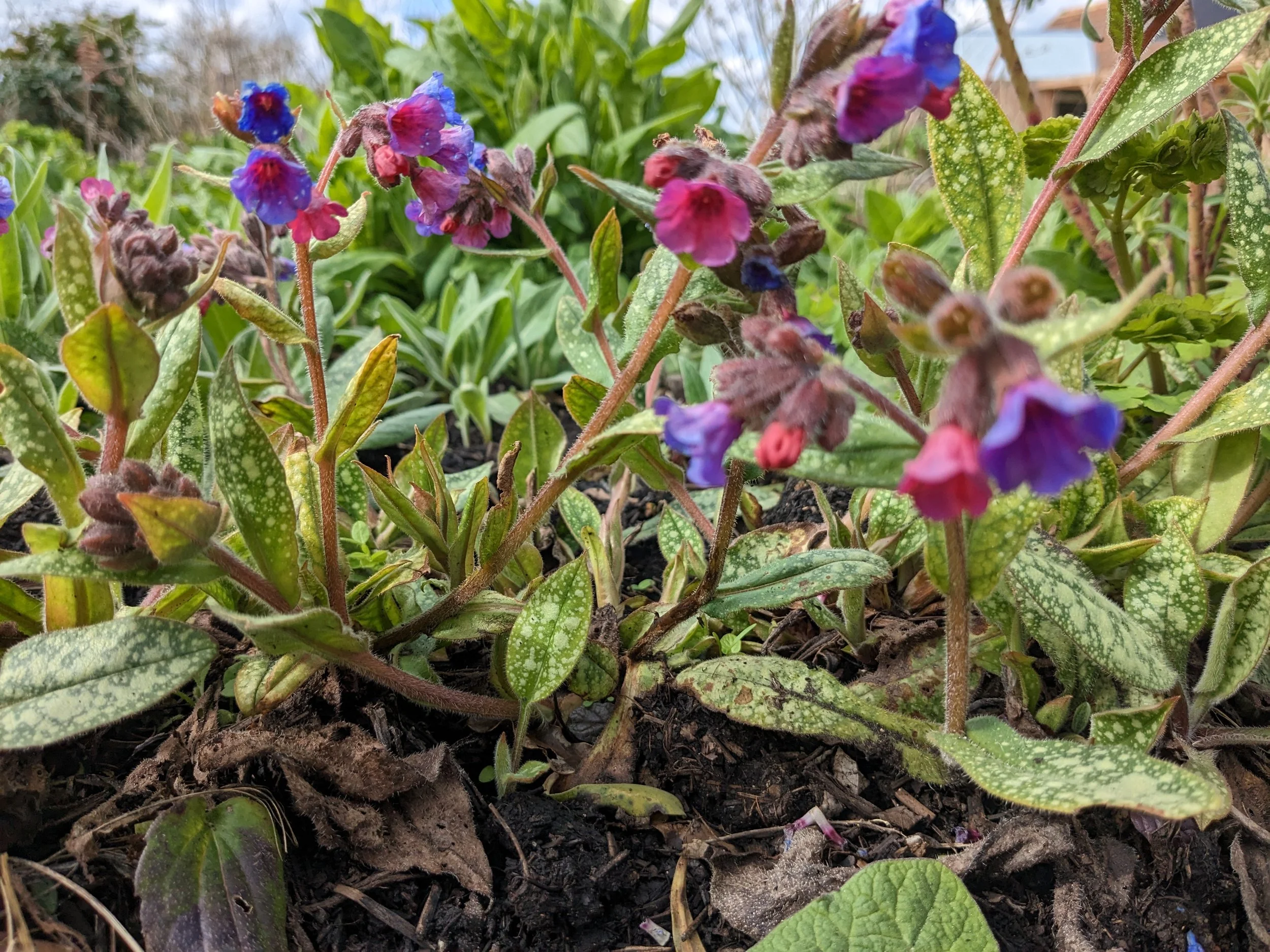
March pulmonaria in flower
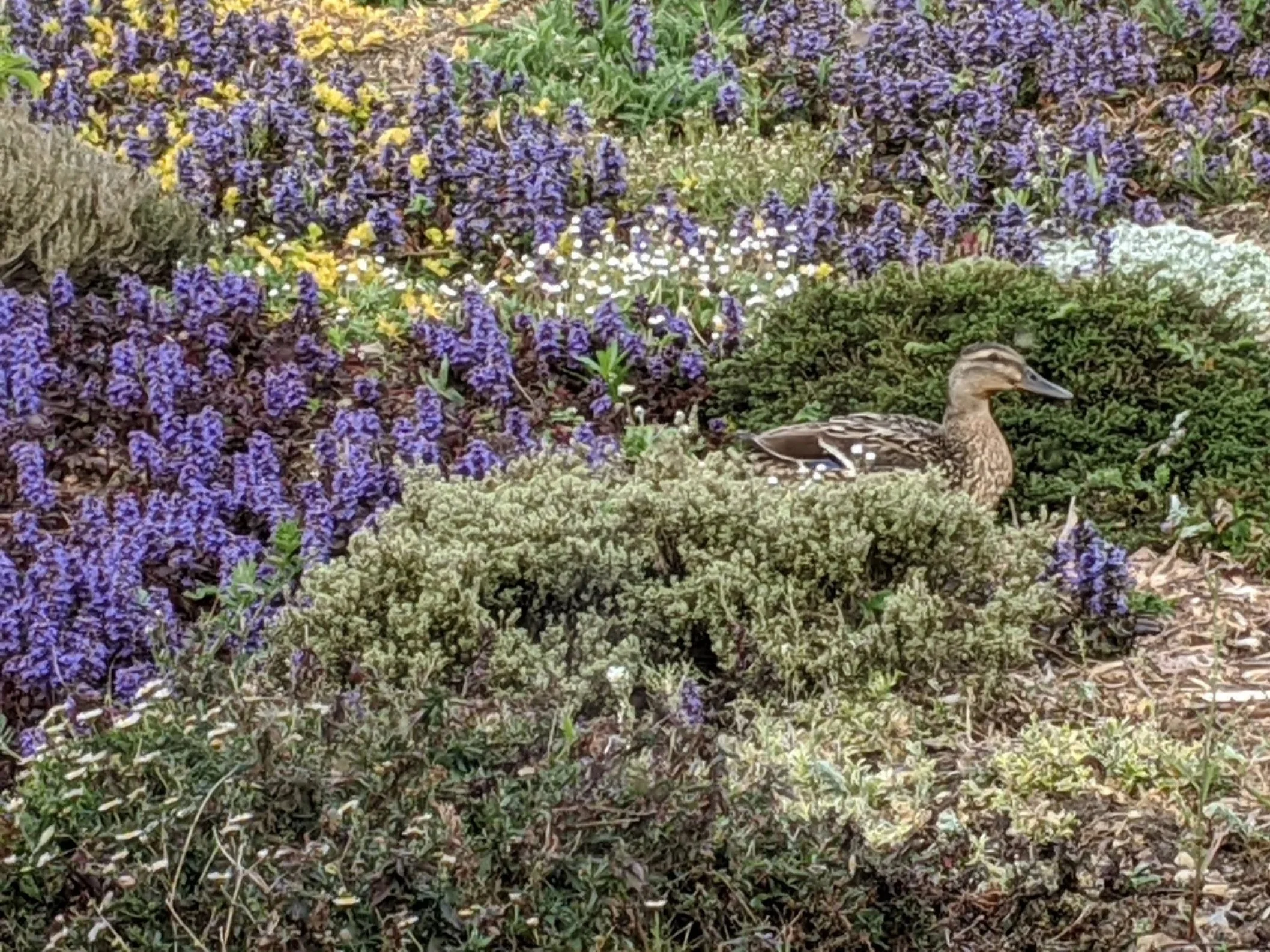
April. Yes, she laid her eggs in there. No, they never hatched - she spent too much time enjoying the pond.

early May

June
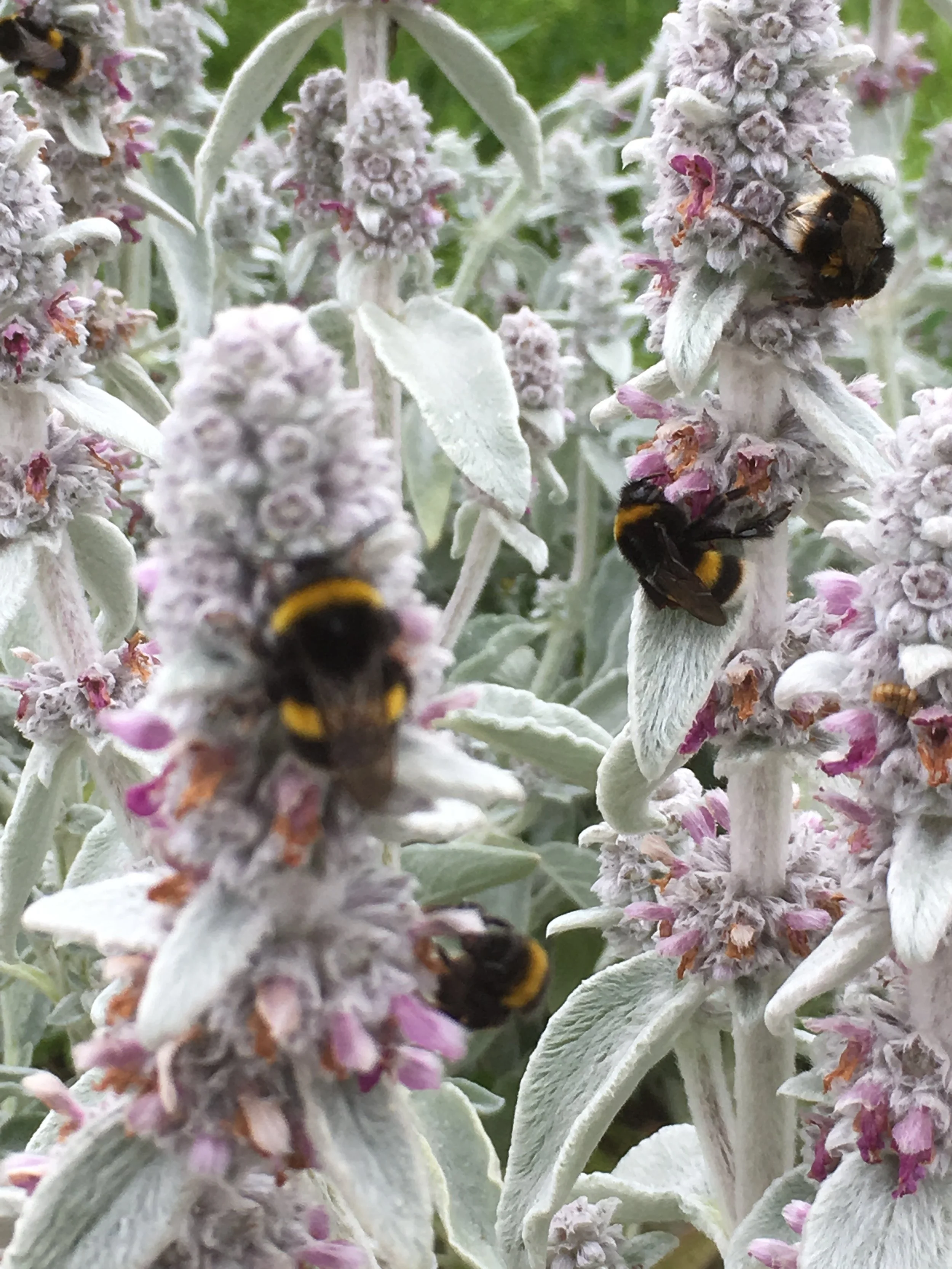
June. The bumbles go mad for the stachys

July

August
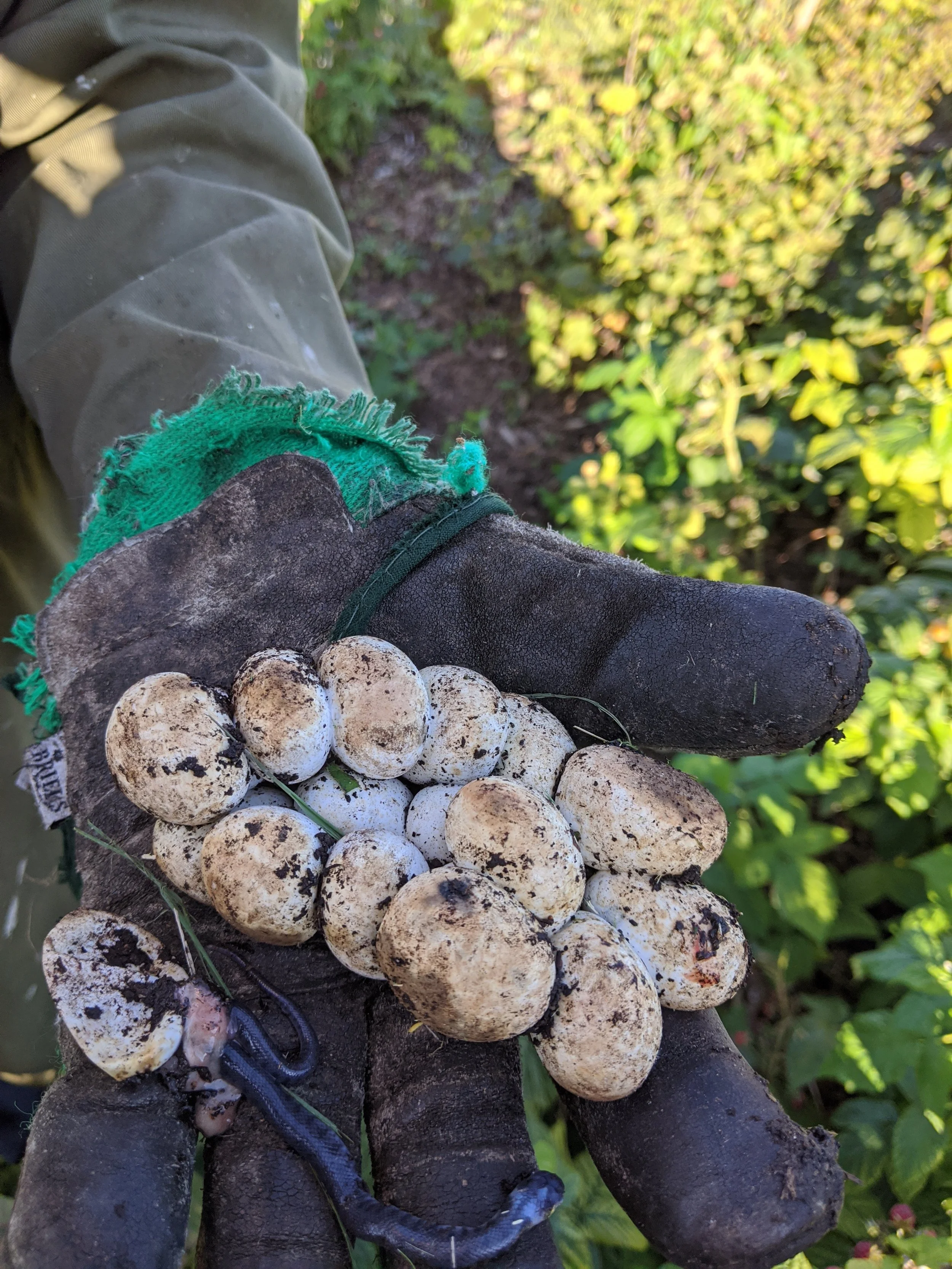
September. Not mushrooms but slow worm eggs. I put them back very carefully where I found them and never saw these ones again. Hopefully they hatched.
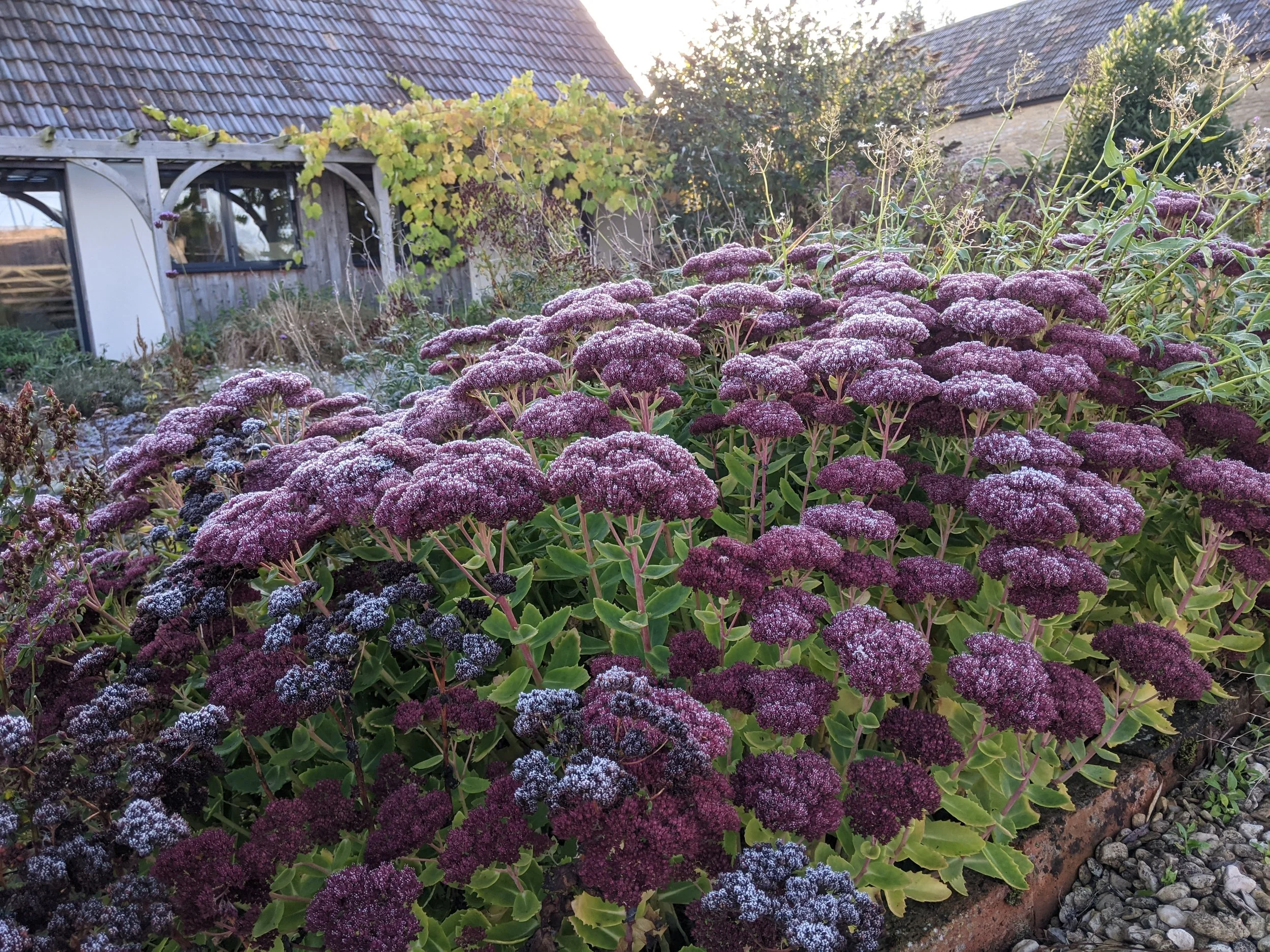
November
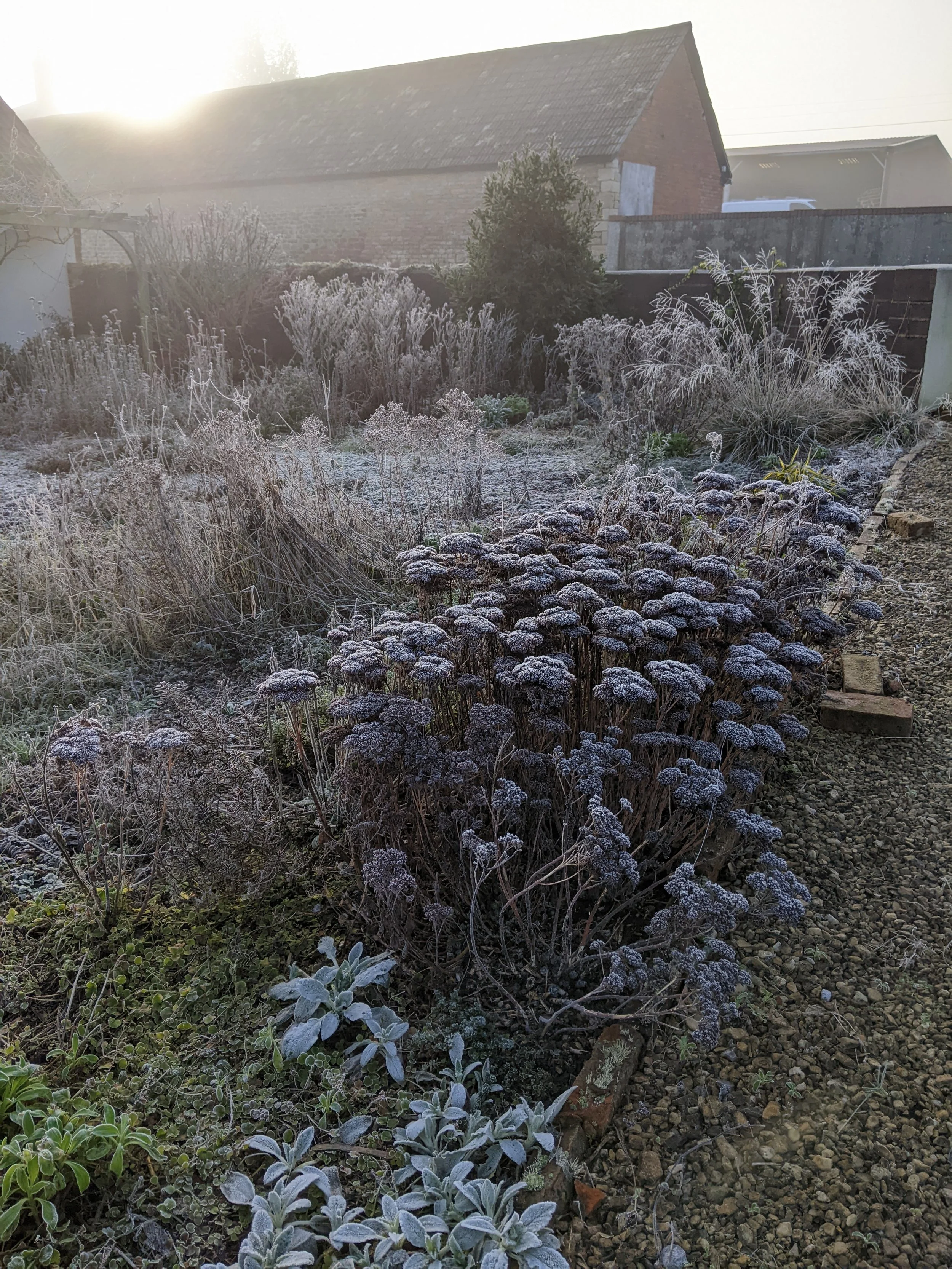
January. The desire to tidy is strong, but if I leave this another 6 weeks, I will get more butterflies. Luckly the hoar frost creates beauty in its own right.
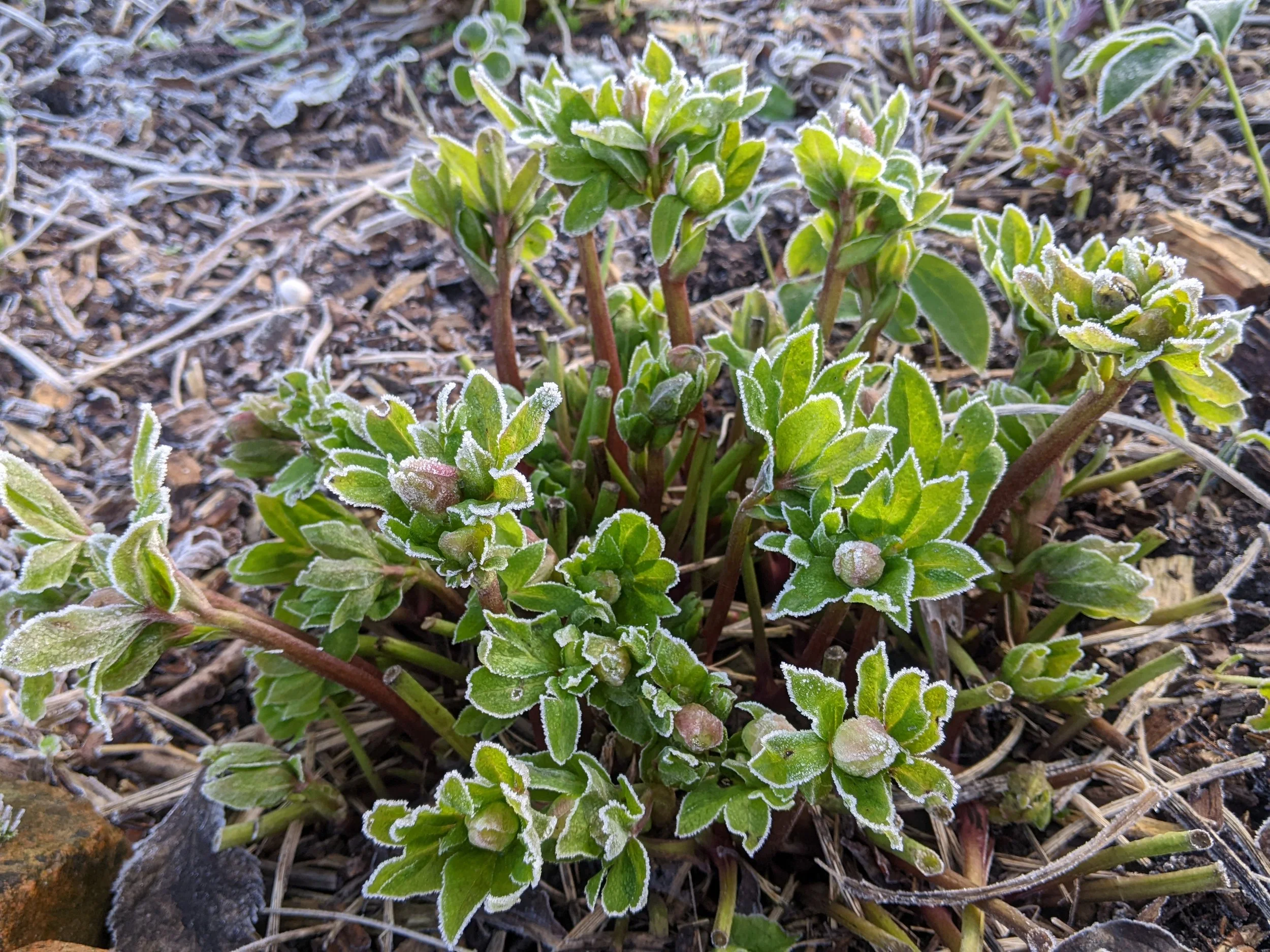
January Hellebores emerging
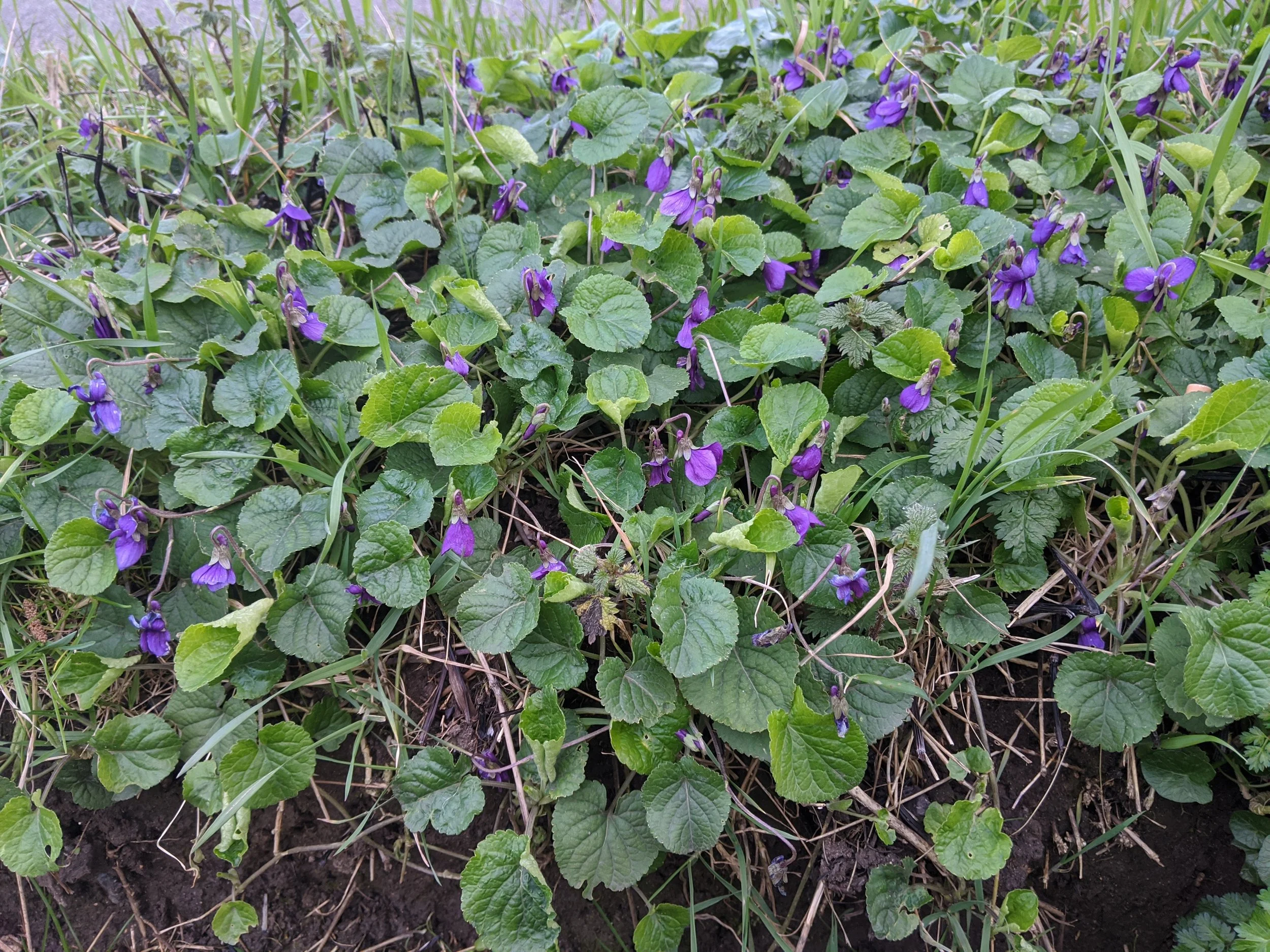
February violets emerging

April
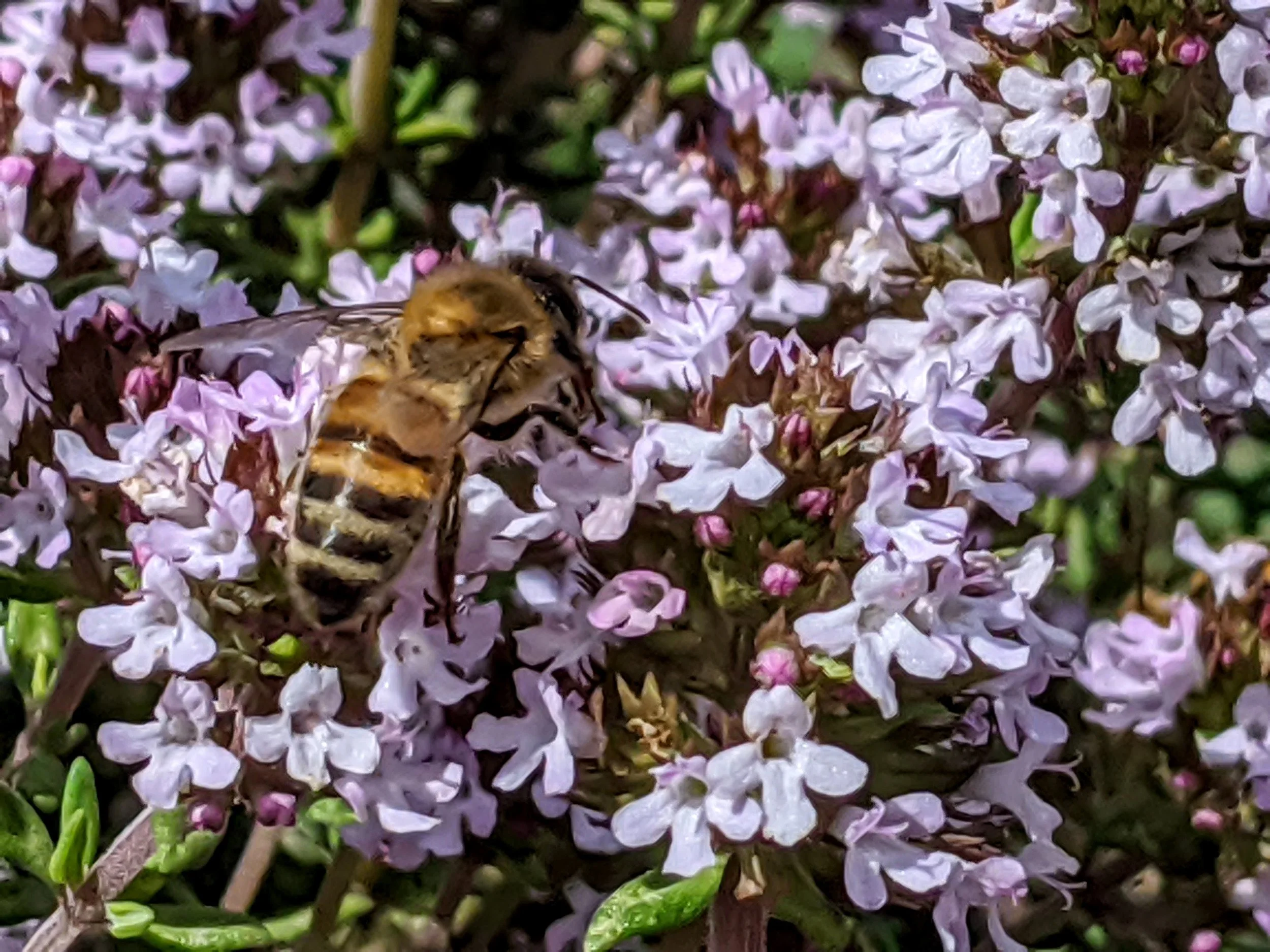
May. My bees are all over the thyme

late May
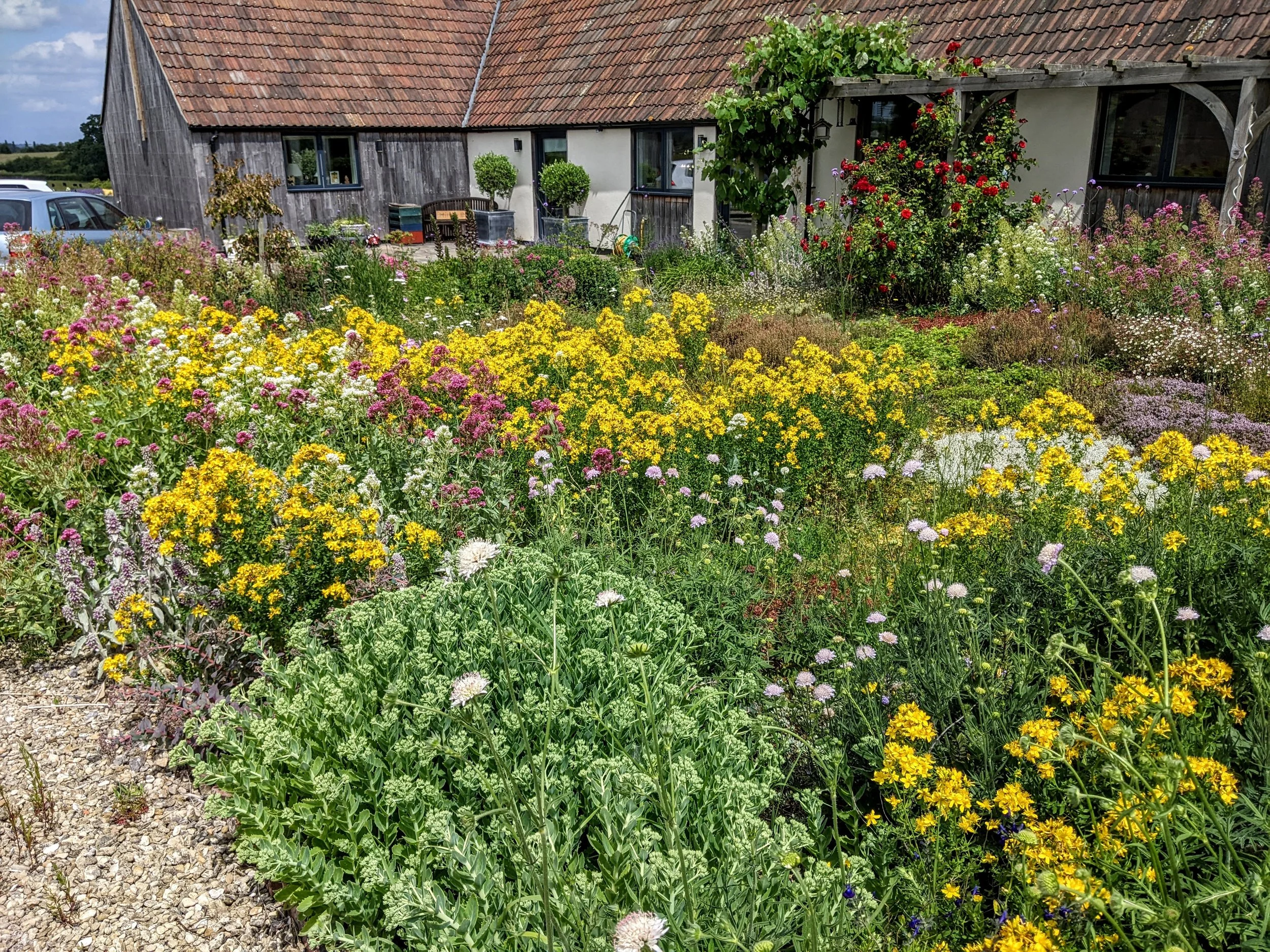
June
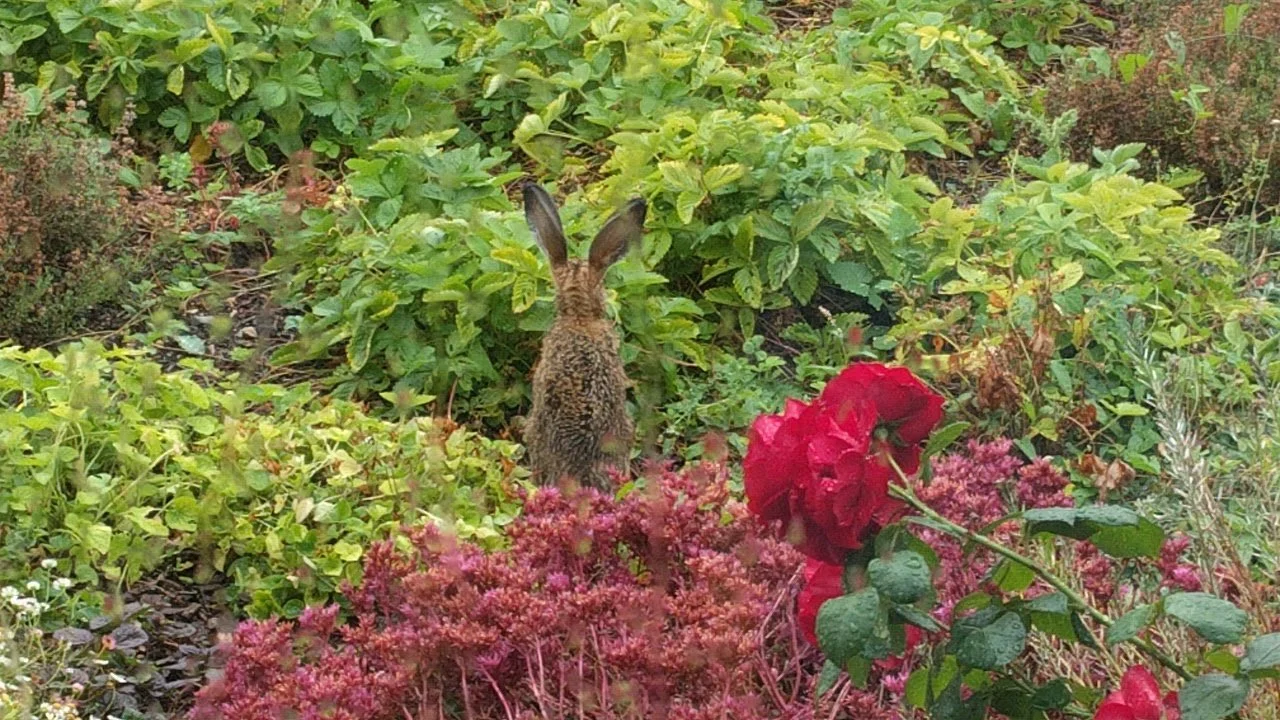
A hare enjoying the garden in July
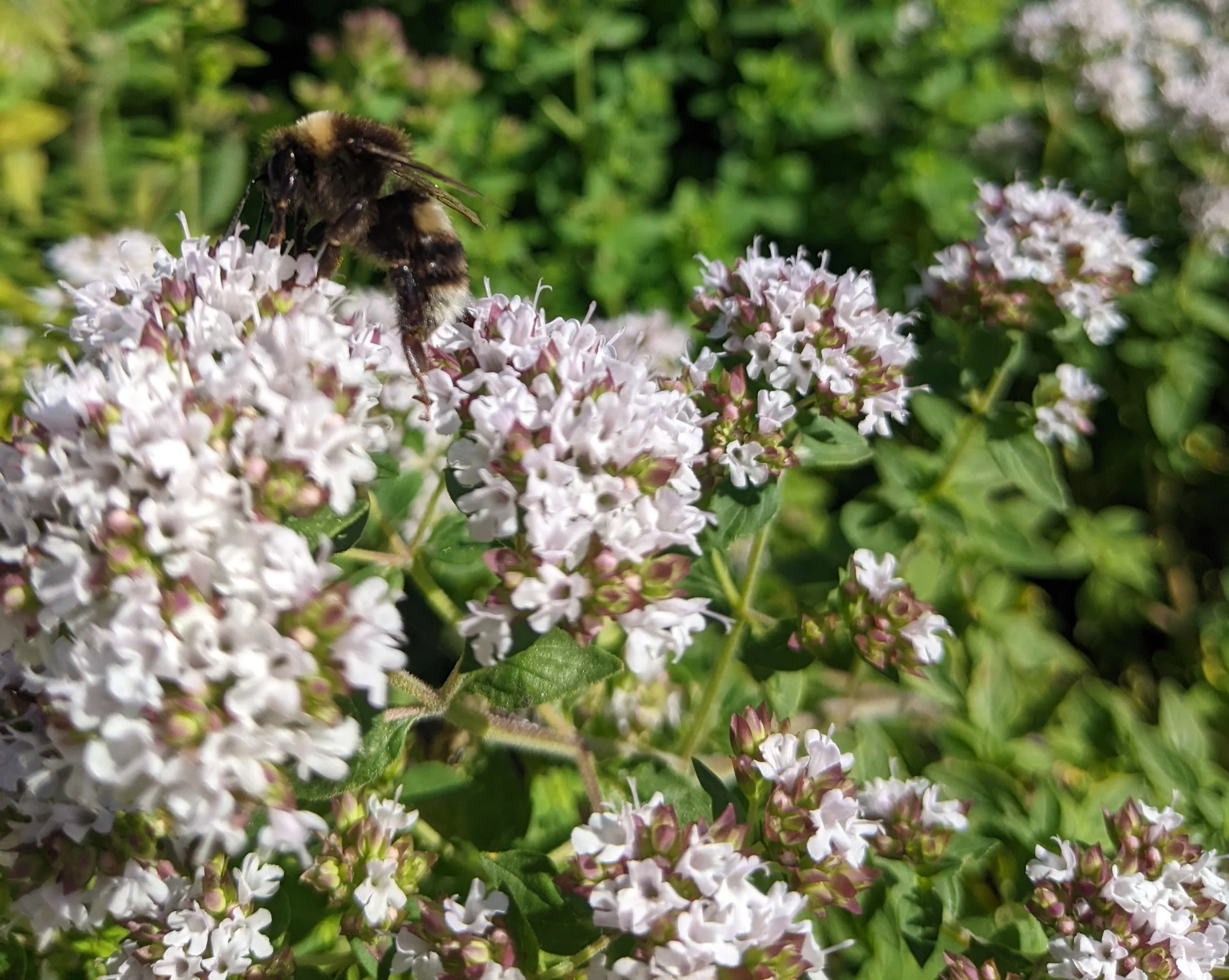
July. Bumble on marjoram
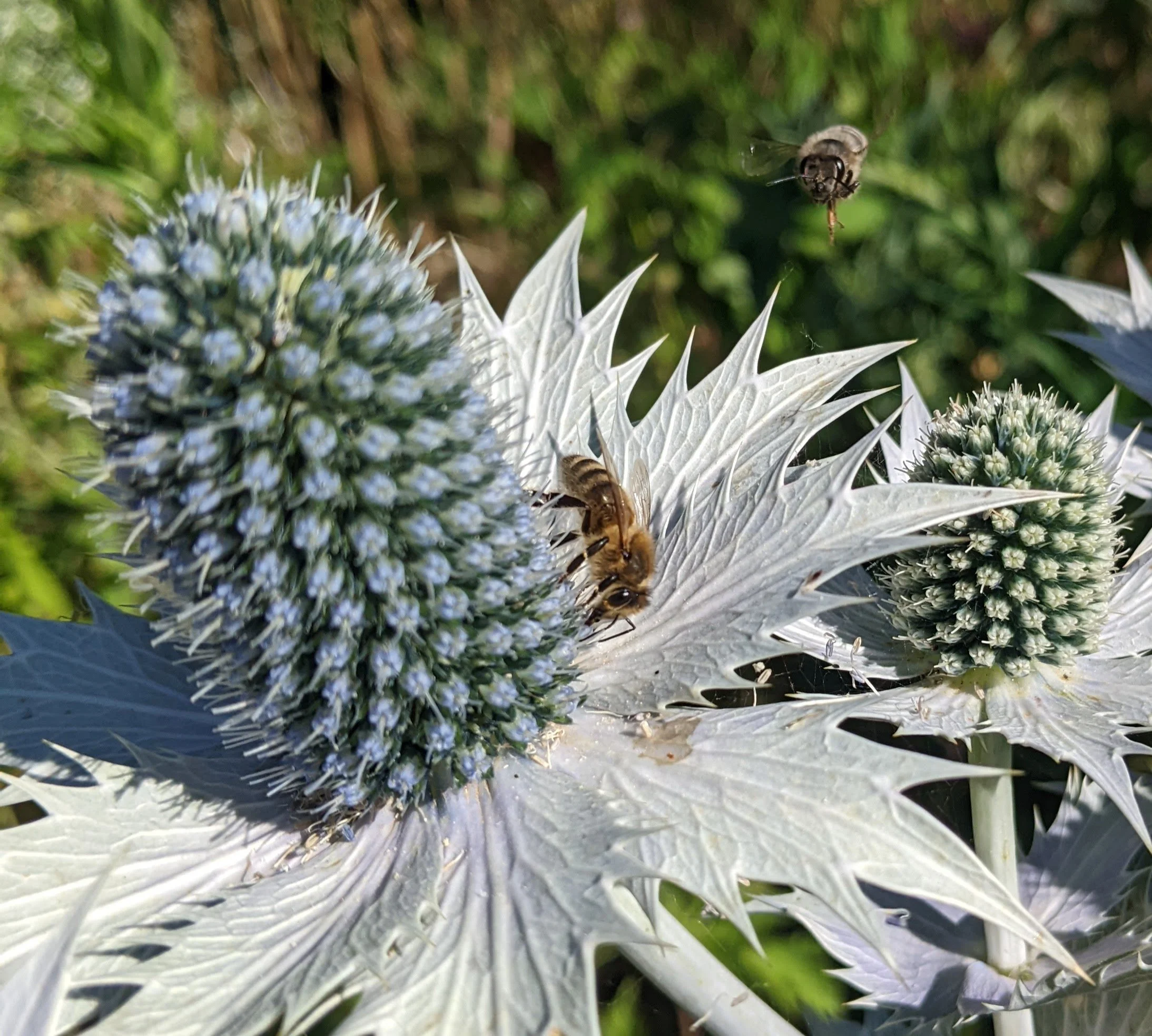
July. My bees feeding on Erigeron

September

Mid October
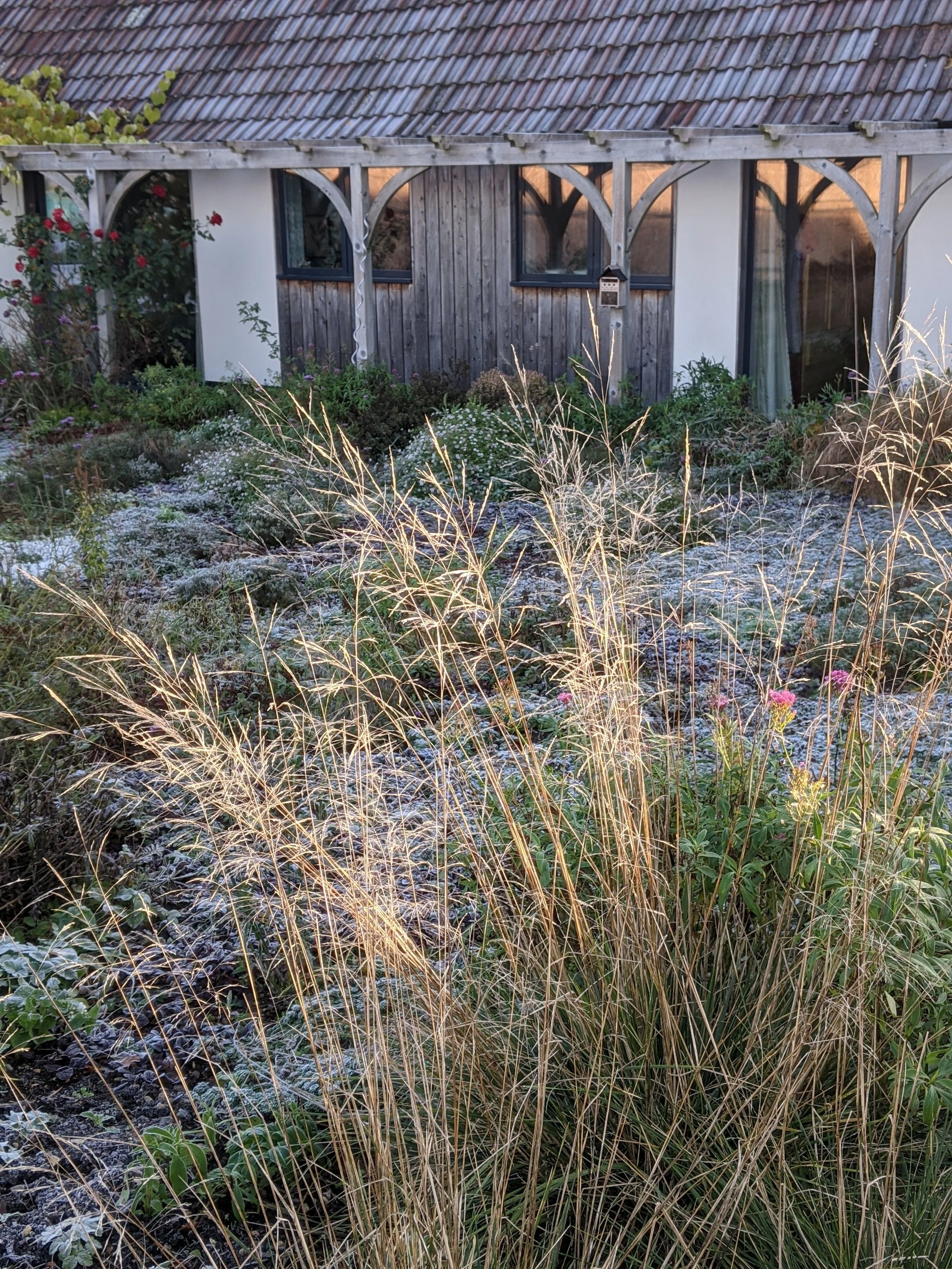
November
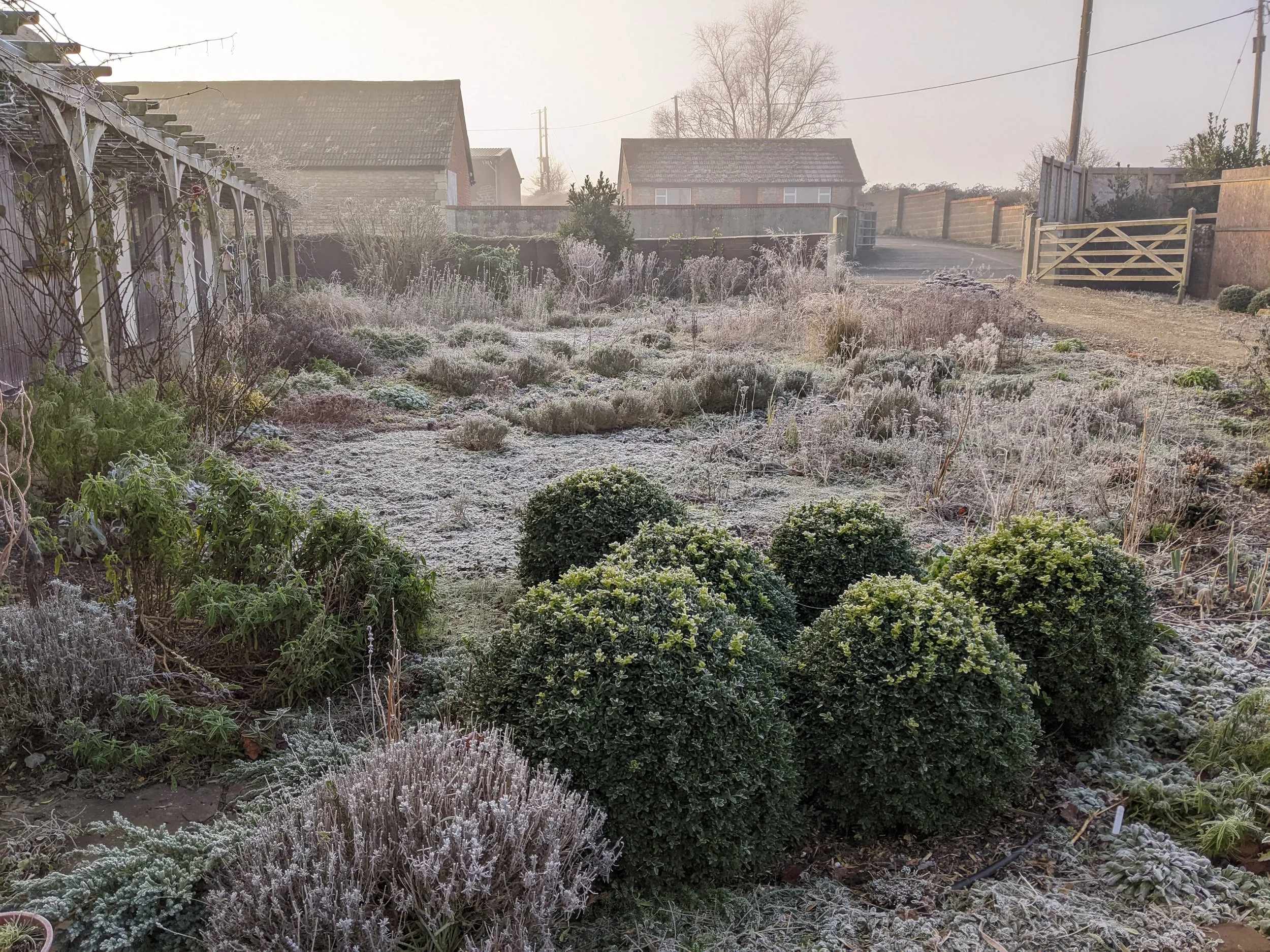
January